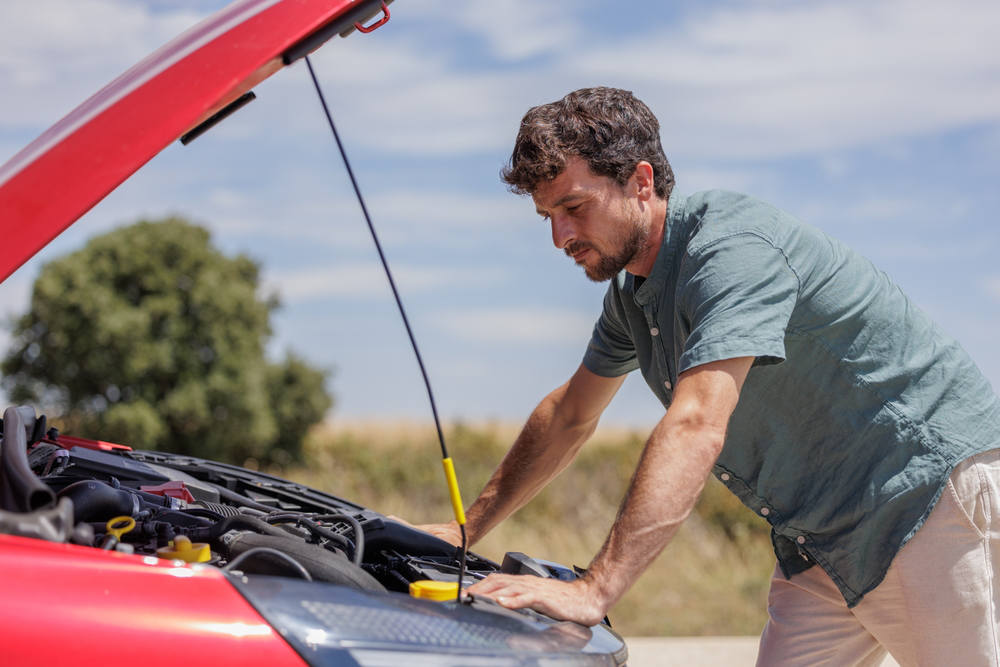
 Young overwhelmed man seeing broken car engine. On your vacation to the beach, your rental vehicle broke down.[/caption]
Your car has been with you through a lot. It may have taken you to work, school, family visits, vacations, medical appointments, and daily errands. After years of use, it can be hard to admit that it may be done for good.
A major breakdown can leave you with a lot of questions. Should you fix the car? Is it still worth anything? Do you need to cancel insurance? What paperwork do you need? Should you sell it, junk it, or donate it?
Before you make a final choice, take a step back and handle the process in the right order. These car breakdown steps can help you avoid extra costs, protect yourself from future problems, and decide what to do next with less stress.
5 Steps to Take After Your Car Breaks Down for Good
Step 1: Get a Second Opinion from a Trusted Mechanic
Before you give up on your car completely, have a trusted mechanic take a look. A car that seems finished may still have a repairable problem. A dead battery, bad alternator, failed starter, worn belt, or sensor issue can make a car seem worse than it is.
Ask the mechanic for an honest repair estimate. If possible, get the estimate in writing. It should explain what is wrong, what parts are needed, how much labor will cost, and whether more repairs may be needed soon.
This step is important because emotions can affect your choice. If you love the car, you may want to fix it no matter what it costs. If you are tired of the car, you may want to move on too fast. A mechanic can give you a clearer view.
Ask simple questions before you decide:
- Is the car safe to drive if it is repaired?
- How much will the repair cost?
- Will this repair fix the main problem?
- Are more major repairs likely soon?
- Would you repair this car if it were yours?
Sometimes the answer will be good news. The car may only need a simple fix. Other times, the mechanic may confirm what you already feared. The car may not be worth the money, time, or stress anymore.
Step 2: Weigh the Cost of Repairs Against the Car's Value
After you know the repair cost, compare it with the car's value. This is one of the clearest ways to decide whether fixing the vehicle makes sense.
Use a free online valuation tool to look up what your car may be worth. You will usually need the year, make, model, mileage, trim, and condition. Be honest when you enter the condition. A car that does not run is worth less than one that is still safe to drive.
Next, compare that value with the repair bill. If your car is worth $2,000 and the repair will cost $1,800, fixing it may not be the best choice. If the repair costs more than the car is worth, it usually does not make financial sense to move forward.
You should also think about future costs. Older vehicles often need more than one repair. After you fix one issue, another may show up soon. You may also need tires, brakes, a battery, suspension work, fluid leak repairs, or other services.
Supplemental costs need to come into play as well. A broken car may still cost money for towing, parking, storage, registration, or insurance. If it sits too long, it can become a bigger burden.
The repair is small and the vehicle is still safe, fixing it may be the right move. But if the repair bill is high and the car has little value left, it may be time to let it go.
Step 3: Cancel Your Insurance and Registration
Once you decide you are done with the car, you need to handle your insurance and registration carefully. Do not cancel everything without checking the proper order first.
In many cases, you should wait to cancel your insurance until the car has been sold, junked, traded in, or donated. If the car is still registered in your name but no longer insured, your state may treat it as an uninsured vehicle. That can lead to fees, penalties, or a suspended registration.
Start by checking with your local DMV. Each state has its own rules. Some states require you to remove or return your license plates. Others allow the plates to stay with the vehicle. Some states require a notice of transfer, seller's report, or release of liability after you no longer own the car.
A safe process usually looks like this:
First, complete the sale, donation, trade-in, or junking transfer. Then remove, return, or transfer the plates if your state requires it. Next, file any required DMV notice. After that, keep proof that the vehicle is no longer yours. Once the car has left your name, contact your insurance company to cancel or update your policy.
You should also ask your insurance company if canceling the policy will affect your other vehicles or future rates. If you are buying another car, you may need to update the policy instead of canceling it.
Handling this step the right way can help you avoid future problems. It can protect you from being tied to tolls, tickets, towing fees, storage fees, or accidents connected to a car you no longer have.
Step 4: Gather Your Paperwork
Before you get rid of the car, gather the paperwork you may need. This helps make the process smoother whether you sell, scrap, trade, or donate the vehicle.
The most important document is usually the car title. The title proves that you own the vehicle and have the right to transfer it. If you lost the title, contact your state's DMV. You can usually request a duplicate title, but it may take time to arrive.
If there is a loan or lien on the car, you may also need a lien release. This shows that the lender no longer has a claim on the vehicle. Without this document, it may be harder to transfer ownership.
You should also keep proof of the transfer. This may be a bill of sale, donation receipt, junkyard receipt, trade-in form, pickup confirmation, or other written record. The document should show when the vehicle left your possession.
It is also helpful to have your vehicle identification number, or VIN, ready. You can usually find it on the dashboard near the windshield, on the driver-side door frame, on your insurance card, or on the title.
If you plan to donate the car, ask the donation organization what documents are needed. A good donation service can explain the process and help you understand what to prepare before pickup.
Do not throw away your records after the car is gone. Keep copies of the title transfer, DMV notice, insurance change, and sale or donation proof. These records can help if you get questions later from the DMV, your insurance company, or another party.
Step 5: Decide What to Do With the Car
After you confirm the car is not worth fixing and gather your paperwork, decide what to do with it. Most people have three main choices. You can sell it, take it to a junkyard, or donate it to a good cause.
Selling the car may help you get some money back. If the vehicle still has usable parts, someone may want to buy it as-is. However, selling a broken car can take time. You may need to list it online, answer questions, meet buyers, negotiate the price, and arrange towing.
A junkyard may be faster. You may get paid for scrap metal or parts, and the vehicle can be removed from your property. This can be a simple choice if you only want the car gone. Still, the payment may be low, and you need to make sure the title and transfer paperwork are handled correctly.
Donation is another option. It can be a smart choice when the car no longer works for you but may still have value for others. Instead of letting it sit unused or selling it for a small amount, you can turn it into support for a meaningful cause.
If your car has reached the end of its useful life, donating it to Breast Cancer Car Donations can give it one last purpose. Your old vehicle can help support breast cancer-focused nonprofit organizations that serve patients, survivors, and families in need.
Think about what matters most to you. Selling may make sense if you want to try for more cash. Junking may work if you want a quick removal. Donating may be the best fit if you want a simple process and the chance to help others through a car that has run its course.
Ready to Let Go? Consider Donating Your Car to Breast Cancer Car Donations
If fixing your old car feels like more trouble than it is worth, donating it to Breast Cancer Car Donations can turn it into something meaningful. A vehicle that no longer runs for you may still help support people facing breast cancer.
When you donate your vehicle, Breast Cancer Car Donations will auction it. The proceeds go to breast cancer-focused charity partners. These IRS-certified 501(c)(3) nonprofit organizations use the funding to help uninsured and underprivileged breast cancer patients.
This support may help cover treatment, doctor visits, hospital fees, medications, follow-up care, screenings, diagnoses, and other essential healthcare services. Donations may also support breast cancer awareness, prevention education, counseling services, and follow-up care for survivors.
Breast Cancer Car Donations accepts many types of vehicles, including cars that need major repairs. Click here to learn more about what you can donate besides cars. The organization also offers free professional towing anywhere in the United States, which can save you from having to move a broken-down vehicle on your own.
The donation team can also help with the needed paperwork. After your donated vehicle is sold at auction, Breast Cancer Car Donations will provide a tax-deductible sales receipt for your records. If you have questions about your specific tax situation, speak with a qualified tax professional.
For more information about Breast Cancer Car Donations, please refer to the FAQs page. If you have any questions or concerns, feel free to contact us here or call the toll-free hotline at (866) 540-5069.
A broken-down car does not have to stay in your driveway or keep draining your money. By donating it, you can clear space, move forward, and help support breast cancer patients who need care.